

This is me, shortly before my cancer diagnosis. I had just run my first half marathon in under 2 hours. I had no idea what was going to happen next.
Latest statistics provided by Macmillan Cancer Support show that there are more than 3 million people living with cancer in the UK alone and that, on average, someone is diagnosed with cancer at least every 90 seconds – and yet, I never thought that it would happen to me.
I was 42 years old. A husband and a father. I’d just finished three years of intense psychotherapy to deal with crippling high levels of shame, self-criticism, anxiety, and depression. I was finally happy. For the first time in a long time.
Four months later, I was told I had cancer. Three months after that, I was told that I was going to die and, even though no one can tell you exactly how long you’ve got, I was told it could be as little as two months.
There’s no way to describe how you might feel when a doctor tells you that they can’t cure your cancer. That it will get progressively worse. That it will kill you. My first reactions were ones of denial, anger, fear, and disbelief. Not only had I been handed a death sentence, but I also had a beautiful 5 year old daughter, and the idea of leaving her in only a matter of months was unbearable, no… unthinkable.
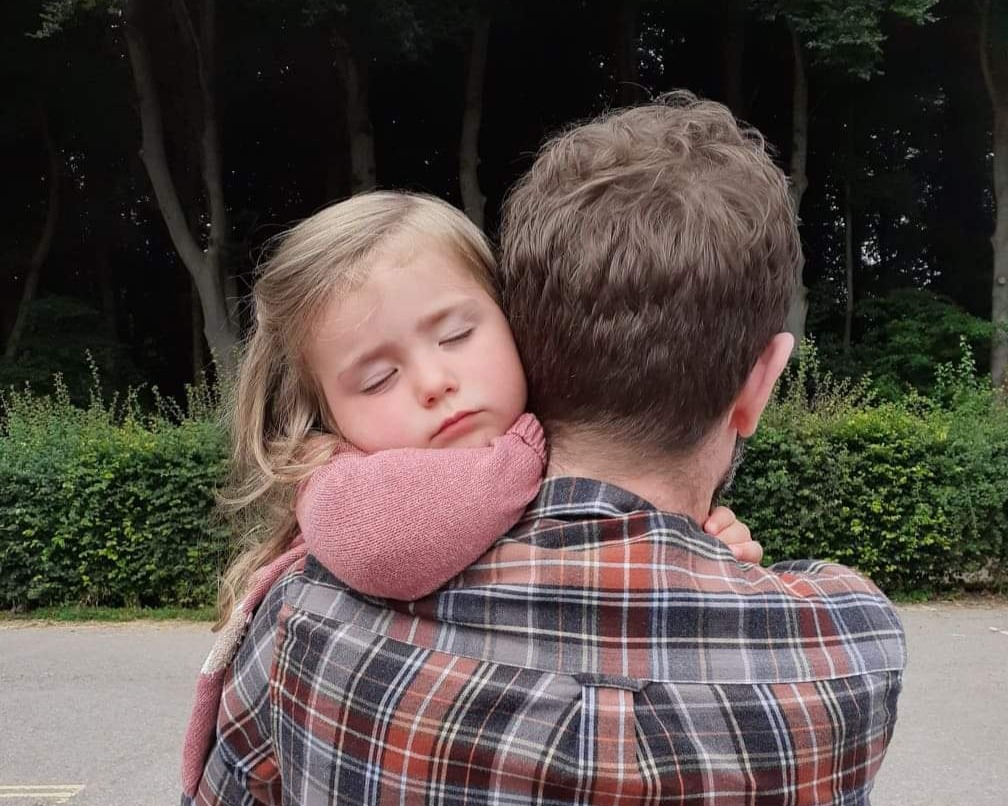
The first thing I did was sign the consent form for chemotherapy. Then, when I got home, I typed… ‘has anyone survived terminal cancer’ into a search engine, and what I read gave me hope. Hope that I could live longer than expected. Hope that I could do the unexpected. In essence, that’s what this blog is. It’s a story of hope. My story of hope, and now I want to share it with you.
You might have noticed that I didn’t say that I am dying and that I said that I was going to die instead. It’s a subtle difference maybe but the fact remains that I am not dying. Yes, I have terminal cancer and yes, there is no cure – indeed, it’s expected that it will be the cause of my death, however, as it is right now, we’ve been able to control the disease and even shrink the tumours.
What this means in reality is that I’m currently living symptom free, and I’m living for longer than expected (almost two years instead of two months). My daughter will now be 7 in May, and thankfully, I’m still here making new memories with her every day. I also feel as though I’m living my best life, and now, I want to help you to live well with cancer.
Knowing all of this, it might sound strange to hear that one of the first things I asked when I received my terminal diagnosis was not something I asked a doctor. It was something I had to ask myself:
Do I want to live?
As someone who had previously struggled with mental health issues for years, there have been many times when the answer to that question would have been a resounding no. At my lowest, I was placed in a community mental health care facility because there was an immediate danger to my life. Me.
Now, my life was in immediate danger again. And make no mistake, cancer, whether terminal or not, is a formidable opponent! Cancer cells constantly grow and divide to create more cells that will eventually form a tumour. By the time the tumour is big enough to be detected on a scan, it could already contain MILLIONS of cancer cells. Think about that.
What I discovered surprised me. Not only was the answer yes, but I found out that I had an amazingly strong will to live – and I knew that I was going to have to give everything in my fight to survive. I had a wonderful family, and there was love and joy in my life. In my head, I decided that there was no way that even something as devastating as a terminal diagnosis was going to change that.
And it was. Devastating. Pick an emotion, any emotion. I had all of them without really knowing how to feel. I just couldn’t accept what I was hearing, and certainly, I didn’t know how I was going to cope. And yet, for the most part, I have coped. I say that because, even now, there are days when my emotions can feel so overwhelming that they actually become too painful to cope with.
This feels pretty normal to me. Living with cancer is a rollercoaster of emotions, but overall, I would say that the intensity and hopelessness I felt have lessened over time. To a degree. I still worry; I still get upset; I still have moments when I’m unable to stop crying… but it becomes more bearable, and a lot of the time, I find I’m not even thinking about my situation.

So I don’t think there is a right or wrong way to react when your doctor tells you that you may only have months to live, especially during those first few days or weeks. I asked myself some of the obvious questions like:
- Why me?
- Did I give myself cancer?
- Do I deserve to die?
That last question was particularly upsetting, but, again, it can be perfectly normal and understandable to want to know the answers to some of these things. Incidentally, one of the first people I turned to, online at least, was a cancer survivor, and he was saying that you have to accept that you gave yourself cancer – but I don’t agree.
I do think you have to accept your situation in order to move on, but not that you gave yourself cancer. For one, it might not be true, but it’s also already such an incredibly difficult time that I think, above all else, you need to be kind to yourself. If someone you loved had cancer, you wouldn’t tell them that they gave themself cancer.
The good news is that there are things I’ve learned and done on my cancer journey which I believe have helped me not only survive, but thrive, and I’ll be sharing all of them with you. As I said before, mine is a story of hope, and, even though it might feel hopeless when you find out that you have cancer, hope is the one thing you should try to keep more than anything else. It’s that important because, without hope, there is very little to live for… but with hope. With hope, you’ll always have a reason to keep on living.
Of course, I’m not saying that you can control the outcome of your cancer diagnosis using positivity – I still believe that conventional treatments offer the best chance of fighting cancer – it’s just that I believe that living your best life with cancer does require a positive attitude; determination; acceptance; compassion… and that it is hope that underpins all of these things.
I am not a cancer survivor. I’m a cancer thriver. I haven’t beaten cancer, however, as long as there is even a remote chance for survival, I will never stop fighting. Indeed, even during the roughest times, I’ve been able to pick myself up and live to fight another day. There are going to be times when you’re exhausted and ready to give up. That’s okay. Living with cancer can feel like a never-ending battle, but those are the times you need to dig deep and remember that you are literally fighting for your life.
That said, hope and blind optimism are not the same. I’m realistic about my odds. Each year, around 167,000 people die from cancer in the UK alone. That’s 460 every day!
That’s one of the reasons why I live by a simple motto:
Plan for the worst. Hope for the best.
If I let it, my situation could easily become another anchor; something that weighs me down and that could lead to depression which, ultimately, is going to prevent me from living my life to the fullest. That’s really what this blog is about, living life to the fullest, and in that sense, I feel as though I’ve already beaten cancer.
Now, some people mistakenly believe that alternative and complimentary therapies are the same, but they’re not. I’m an advocate for complementary therapies. These are things that can be used alongside medical treatments (I’ve had chemotherapy and immunotherapy), and I didn’t start this blog to encourage you to shun medical treatment in favour of alternative therapies, BUT… I also think that convention can only take you so far. The rest is up to us.
In all likelihood, there are going to be many factors that have been important in my fight against cancer. Certainly there are some basic principles I’ve followed which, I believe, have allowed me to lead a happier and healthier life. I have made wholesale changes to my diet and lifestyle. Why? Because I want to live, and if my diagnosis has taught me anything, it’s that:
Life is too short
 Me, Myself and Cancer
Leave a comment