
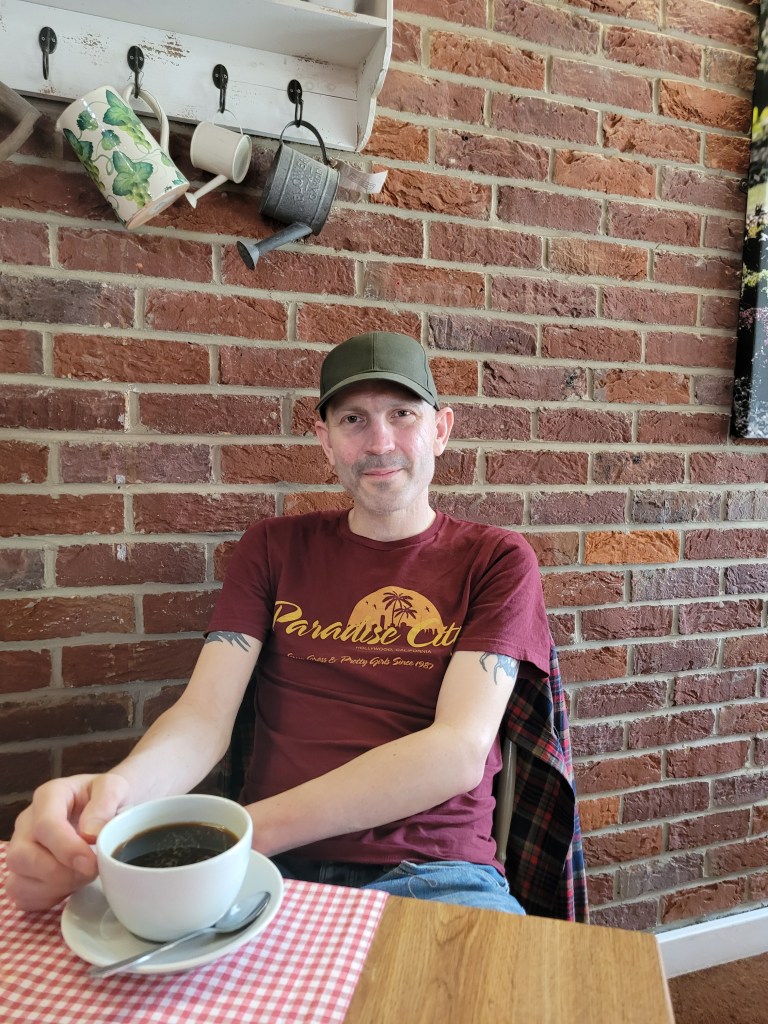
Hooray. It’s erm, National Cafe au Lait Day! Okay so it might not be the most historically important day of the year. And no one seems to know where or when it started. But mone of that matters because it gives me an opportunity to talk about one of my favourite things. Coffee.
“To me, coffee is more than a drink, it’s an experience“
And as if that’s not all. Just for fun, here’s my personal coffee bio:
- I drink 1 or 2 cups of coffee every day.
- I only drink black coffee or coffee made with non-dairy milk (usually soy or oat).
- I don’t add sugar, syrup or sweeteners to my coffee.
- My favourite time to drink coffee is in the morning.
- I don’t own a fancy coffee machine.
- I buy organic ground coffee to drink at home.
- My optimum ratio for coffee made using a cafetiere is 15g of ground coffee for every 250ml water (yes I really do weigh and measure it).
- I use a reusable coffee cup on the go (because most coffee cups can’t be recycled at home (not in the UK at least) although you can take these to well-known coffee chain cafes for recycling).
Coffee hasn’t always been my number one drink though, that long-held distinction belonged to tea, but since my diagnosis, inexplicably, coffee has indeed become more than just a drink to me. Tea often felt like a habit. That’s not to say I don’t enjoy it, but drinking coffee is a thing of personal indulgence. Something to be savoured. Something… sexy (almost).
Like Cafe au Lait Day, I couldn’t tell you exactly where or when this relationship began but it has become such an important part of my life that I find it hard to imagine a time when it wasn’t there. Of course, that could be the addiction talking. People build up a tolerance to it and before you know it you’re injecting it into your eyeballs hoping to achieve the same hit of adrenaline you had when you took your first sip.
And I do admit that I can experience some irritability if I go for too long without it and yet, if I drink too much I’m just as likely to experience jitteriness, anxiety and heart palpitations. Worse still, if I drink it after 2pm I’m probably going to be awake for a few days! So far, as an advert for drinking coffee, I don’t think this post is going particularly well.
If I had to, I’d say that this all started in hospital because there are two main hospitals I visit regularly and they both have a well-known coffee chain cafe (I used to go for appointments but now I just go for the coffee). This offered a welcome distraction from everything that was going on but I’ve never felt particularly comfortable about paying for tea. Coffee is expensive but relatively it offers better value than a teabag and some hot water!
Another thing that happened around that time was that I switched to non-dairy milk and it didn’t matter which type I chose, it just wasn’t possible to replicate the taste of tea, whereas I actually prefer coffee made using soy or oat milk and I don’t feel the need to add anything to it. In fact, it’s much more likely that adding sugar, syrup or drinking lots of milky coffee is more of a problem than the caffeine itself because I also switched to drinking organic green tea which is praised for it’s potentional health benefits and yet, that contains caffeine too.
Who?
Another reason to be thankful is that the World Health Organization (WHO) removed coffee from its list of carcinogens in 2016. This is significant because, for anyone who doesn’t know, a carcinogen is a substance that can cause cancer and this now means that there is no clear evidence that drinking coffee increases cancer risk. Yippee. So it’s very unlikely that I gave myself cancer by drinking coffee… Unless. Unless I’d been drinking it too hot because a recent study also highlighted a possible link between hot drinks and – you guessed it. Oesophageal cancer!
WARNING! Drinking coffee can cause freakishly long arms.
And therein lies the problem because, despite the finding being based on a single study that focused on tea drinking in Iran and South America where drinking habits are very different (drinks are served much hotter and often drunk through a straw), it was picked up by the media and it adds to the coffee confusion.
So when I tell you there are several areas of new research indicating some pretty big health benefits of drinking coffee such as:
- coffee may contribute to a lower risk for developing several cancers;
- coffee could protect against DNA damage, slow the growth of tumours or cause damaged cells to die before they develop into cancer; and
- coffee may be able to improve insulin sensitivity and prevent chronic inflammation – two things thought to be involved in the development of cancer and growth of tumours.
It’s important for me to say that these are just theories at the moment. Scientists still don’t really seem to understand the biological mechanisms that underpin this research but I feel like we’re on the cusp of some truly amazing breakthroughs regarding the impact food and nutrition can have against cancer. I don’t necessarily have the luxury of time though and so I have to make decisions based on the information available to me now (not to mention, a lot of it just feels like common sense to me).
I do believe, however, that there’s already enough evidence and meaningful research to show that a diet filled with a variety of vegetables, fruits, whole grains, beans and other plant foods can help prevent and treat cancer. And it might surprise you to learn that there’s enough antioxidants in coffee that it can be viewed as a healthy plant food! Another favourite healthy plant food of mine is 100% cocoa dark chocolate which is also high in antioxidants – The question is:
Are you brave enough to try it?
For me, the ‘takeaway’ here (pun intended because I’m funny like that) is that drinking coffee in moderation and at a sensible temperature is probably okay and may even have several health benefits. It’s high in antioxidants and it’s unlikely to increase cancer risk in most cases (and may actually help reduce the risk of developing many diseases as well as some cancers). Caffeine, however, is a stimulant and can cause problems for some people who are sensitive to it or regularly drink too much. If this is you, you might want to reduce your intake or avoid coffee altogether.
On the other side of the coin cup, there isn’t enough evidence to suggest you should start drinking coffee if you don’t already. But, there is enough evidence to show that doing something nice for someone can improve your own happiness. This is because, when we are kind to someone, it releases loads of happy hormones and so, because it’s also National Random Acts of Kindness Day, why don’t you offer to buy someone else a coffee? Who knows, it might just make their day.
Sources:
https://www.cancercenter.com/community/blog/2023/11/coffee-and-cancer
https://bmccancer.biomedcentral.com/articles/10.1186/s12885-020-6561-9
https://pmc.ncbi.nlm.nih.gov/articles/PMC8562048/
https://news.cancerresearchuk.org/2016/06/15/coffee-and-cancer-what-does-the-evidence-say/
 Me, Myself and Cancer
Leave a comment