
7 minute read
Cut the mustard
Perhaps it’s not that surprising to learn that chemotherapy would develop out of something as sinister as a potent blistering agent, but that’s exactly what happened. Mustard gas, also known as sulfur mustard, had been used as one of the primary chemical weapons during World War I, but it wasn’t until the 1940’s that it was further developed and observed. It was the era of World War II and scientists were beginning to take note of the effects that the gas would have on soldiers, particularly the toxic changes in their blood cells, which would lead to the first chemotherapy drug (Mechlorethamine) being developed.
The early success of this in treating blood cancers such as advanced lymphomas and leukaemia in the 1960s and early 1970s led to a greater impetus to develop different chemotherapy drugs (there are now over 100) to a treat a wide range of advanced cancers. There is a lot of negativity these days, particularly online, and yet, it has saved countless lives, including my own. Indeed, Cancer Research UK announced in 2023 that a major milestone had been reached when chemotherapy had demonstrably saved over one million lives in the UK alone and, undoubtedly, given many others more moments with their families and loved ones.
In fact, it was thanks to chemotherapy that my uncle was able to live for 19 years, despite being handed a terminal diagnosis, aged just 19, of non-hodgkin lymphoma. These days, lymphoma has a survival rate of up to 90%, depending on stage, age and overall health, however, this was 1970, so when he went into hospital with swollen lymph nodes and fatigue, among other symptoms, they opened him up and, upon discovering the cancer, told him that there was nothing that could be done. Remarkably, that wasn’t the end of his story, however, because my Nanna had read about the pioneering work of doctors at Newcastle Hospital and wrote to them to ask if they would treat her son. He would become one of the first patients to benefit from chemotherapy.
I’ve always been inquisitive, and I’ve made a point to learn as much as I can about cancer and cancer treatment. I want to stay alive, and I do believe that there are things that I can do that are going to improve my chances. I absolutely put my faith into the doctors who are treating me, but that doesn’t mean I’m a silent partner, and it was my decision to start immunotherapy instead of having more chemo… but, I’ll save that experience for another post. Needless to say that chemotherapy has played a big role in my survival so far.
Other than that, it’s difficult to say anything good about it really but, as a plus point, keeping me alive is a pretty significant one and, I do (strangely) have some good memories of this period, which mostly fall into two distinct categories; people and food. In fact, I would say that in the same way I use diet and nutrition now to feel healthier, boost my immune function and reduce any inflammation in my body, I also believe that the things I did then helped me to manage the side effects from my cancer and treatment.
That said, I also ate food that, as a general rule, I don’t usually eat now, especially sugary snacks such as pudding and custard (twice a day), Lucozade (usually before visiting blocks because the least I could do was to stay awake) and Ms. Molly ice lollies! There is a lot of debate about whether you should eat sugary food when you have cancer (or you’re worried about cancer risk) and, outside of this time, I tend to avoid anything with added sugar (in any form), but then it was a good source energy and can even help with nausea (the ward didn’t normally have ice lollies but one of the nurses would smuggle these in for me and stash them in the medicine freezer – If you wanted an ice lolly on ward 14, you had to ask me!)

I always thought that my diet was pretty healthy, but actually, I was eating a lot of processed foods and not a lot of protein, healthy fats, whole grains or nutrients. I definitely became more aware of what I was putting into my body, and I began to take more notice of nutrition labels, which are not worth the paper they’re printed on. I also started to move away from processed foods, especially processed meat (which is known to cause cancer) and, if you can make dietary changes before your cancer treatment starts, this can help give you a healthier head start. An easy place to start is by not overdoing it with food that has very little nutritional value and add beans or vegetables to every meal because what you do eat can be as important as what you don’t.
It was then that I also started taking a daily multivitamin tablet, in fact, I still do today even though my diet is really healthy. This was more important when I wasn’t eating as much though (and if you have side effects like vomiting or diarrhoea) because it would help replenish a lot of those important nutrients I was losing (honestly, whichever brand you think is best is going to be the right one for you). On the other side of this, if you are constipated, you’re gonna want to consider a good fibre supplement! My favourite was, and still is, Laxido, which usually gets the job done as effectively as a Mexican plummer!
Make no mistake. None of it was fun. One of the worst things for me was putting my daughter, who was 5 at the time, through it. She hated seeing me so sick. She hated when the sick bowls would come out, and yet, we all came through it. I can’t say that it feels like a distant memory, but it has at least faded for me, and it taught me a lot about my relationship with food.
I enjoy eating again these days, but my diet is radically different from how it was before my diagnosis. It’s easy to search online for what to eat and not to eat during cancer treatment, but sometimes you just need to make decisions yourself. Yes, try to maintain a healthy and balanced diet, but also, listen to what your body is telling you. I survived chemo. By the skin of my teeth, but there’s no shame if you can’t tolerate it. Some people can’t, and if that’s you, they might need to alter your dose, the frequency, or the drug.
Going for gold
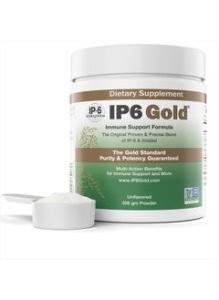
One final thing I would like to mention here (for now because there’s so much more I could write about this), and it’s something that I used throughout my cancer treatment and for a time after, is Inositol hexaphosphate (IP6). Don’t worry, this didn’t mean anything to me either, and you won’t hear me recommending supplements very often, but I do believe this really helped me to deal with the side effects of chemo and control my cancer. Early studies, which are still relatively small and haven’t yet looked at all cancer types, have shown that IP6 has real potential in slowing cell growth, inducing apoptosis (the process of killing cancer cells) and inhibiting tumour spread. It is also used to boost the immune system, which, on its own, is a big plus for cancer patients.
You can easily find more information about it online and it’s definitely something that you should make your own mind up about. I recommend IP6-Gold (It’s not the cheapest, but for me, it’s the best and no, I don’t get any money by recommending it). I would also say that the powdered version is better because you need to take a lot of capsules to achieve the same dosage. Like everything else that affects you and your treatment though, it should be a personal choice.
I need to be very clear and say that I don’t believe IP6 should be used as a replacement for conventional cancer treatments and that more research and large-scale clinical trials are needed to confirm the effectiveness of its potential anticancer effects in humans. You should also probably speak to your oncologist too because, like all supplements, it can interact with some drugs, including cancer treatment drugs.
4 responses to “Chapter Nine: Surviving Chemotherapy – Part Two”
-
very interesting. Ever thought of writing a book?
LikeLike
-
Thank you, and it’s funny that you should say that because I have been thinking along those lines. I’ve never done anything like that before but I’ve used my diagnosis as an opportunity to do a lot of things I’ve never done before. I’m on writing Chris Hindle’s story right now for his family but after that, who knows. It’s always nice to know that people are reading these things and, whether they find it interesting or inspiring, it’s all great to me.
LikeLike
-
-
hi I also have cancer, stage 4 cervical cancer which has spread to the omentum (surrounds the stomach). Have now had 18 chemo sessions and an operation last year, the Doctors changed the chemicals in it, but still lost all body and head hair, even my eyelashes! All is slowly growing back, if a little unevenly. Just waiting for another scan to reveal how it’s doing. I also had fluid in the lungs, which was a byproduct of the cancer.
I’m only just starting to feel a little more human, but Docs have hinted at more chemo,…… watch this space!
LikeLike
-
Wow. 18 sessions. I applaud anyone who has chemotherapy because it can be gruelling. It was so strange to lose all of my hair, especially my eyebrows! How was your experience of that? Did you wear a wig? My hair came back much darker, and strangely, thinner on my head and thicker on my body (but then it can do all sorts of weird and wonderful things to you). Please let me know how your scan goes. I’m having immunotherapy right now but it’s likely I’ll need more chemo in the future. I’ll do it because I have to. The chest drains to treat the fluid were quite awful for me, there’s so many things which are a byproduct of cancer that I just didn’t anticipate. Thank you so much for sharing
LikeLike
-


 Me, Myself and Cancer
Leave a reply to memyselfandcancer Cancel reply